Your alarm is blaring. Your head is pounding. You think, “I should call out today.” But wait! It’s a storytime day. Think of canceling on all those kids eager for songs and stories. What will you do?
If you’ve ever had a morning like this, you aren’t alone, and you probably work in a small library without substitutes to save the day. When I started at my library, I was the sole children’s services staff member and ran multiple weekly storytimes. When I was sick, we canceled. Life went on, I healed up, and I saw those families the next week.
As I’ve learned more about library operations, I’ve seen how some libraries go out of their way to avoid canceling storytime. If not well planned, this can quickly lead to subpar programs, staff working while sick, unfairly compensated labor, and spiraling scope creep. So today, I present the case for canceling.
What about training other staff?
Storytime is a skill honed through training and practice, and we should value it as such. When we plug just anyone in, we’re devaluing the work that goes into planning and presenting an effective program. Any staff who cover storytime should undergo training. Ideally, they should regularly shadow and intermittently lead storytimes under the supervision of youth services staff.
When training additional staff to cover storytime, carefully assess their current duties and interests. Do not have staff uninterested in storytime cover storytime. I’m shocked by how often I hear non-children’s librarians relating their terrible experience covering a storytime. That is not fair to staff and creates uncomfortable storytimes for patrons.
Someone is interested? Great! What are the stated duties for various positions in your library? Is offering programs a distinction between position titles and compensation levels? If yes, do not train staff unless you can secure additional compensation for their training and subbing time. Consider whether training can be added to their existing workload. Do youth services staff have the time to train them? Stop to consider if you are cracking the door open for a culture of unfair compensation, scope creep, and overwork.
It is okay to cancel!
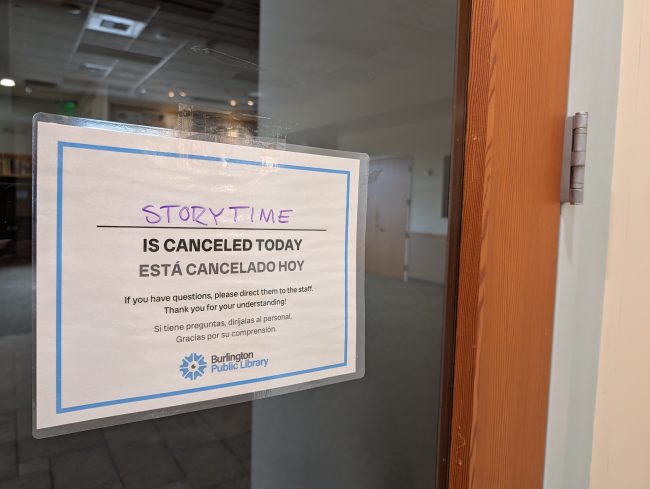
I am here to say that canceling is okay! As soon as program staff call out, other staff should be working to spread the word. You can support staff by having pre-prepared signage to post in the library and online. If you’re using a registration system, ensure that staff are familiar with notifying participants of cancelations in a series.
It doesn’t have to be all or nothing. Consider changing the program. Are there any toys or special activities that are a hit with storytime regulars? If there is adequate staffing, marketing your canceled storytime as a Stay and Play or Sensory Stations creates passive offerings for families who show up for a canceled event.
Reflect on your schedule
If you are having to cancel a lot, consider your schedule. Is your programming load sustainable for minimal staff? Would changing your schedule allow you to hold storytime on days when multiple trained staff are working?
When you do fully cancel, give your staff talking points to address patron questions. Is it a bad look to cancel? Yeah. But library workers are human, and humans get sick. Humans also deserve to be compensated fairly and to use their leave without guilt. We can apologize, communicate the realities of staffing a library, and let our staff be human.
Families are much more likely to give your library another chance if they’re met with a cancelation instead of an ineffective storytime led by staff who would clearly love to be on the reference desk instead.
Eleanor Howell-Shryock (she/they) is the Head Children’s Librarian, managing family and outreach services at Burlington Public Library in Burlington, Washington. They are the Chair Emeritus of the Washington Library Association’s Children and Young Adult Services Section. They are excited to highlight some of the unique challenges and opportunities of working in small and rural libraries for the ALSC blog.