If you walk past the Mountain View Public Library’s program room on a Thursday afternoon, you might hear something like this:
“Mom! Look! It’s… uh… well, I’m calling it a rocket-octopus-robot!”
Welcome to Let’s Create, our process art program where anything goes, everything is a potential art supply if you look at it long enough, and the only real rule is to have fun making something that feels like you.
Let’s Create isn’t a step-by-step craft program. There are no dotted lines to fold or patterns to trace. I simply set out craft materials, along with a generous helping of upcycled treasures from our supply closet, and offer a few sample creations as springboards rather than instructions. Kids take what’s there and sprint with it in directions I never could have predicted.
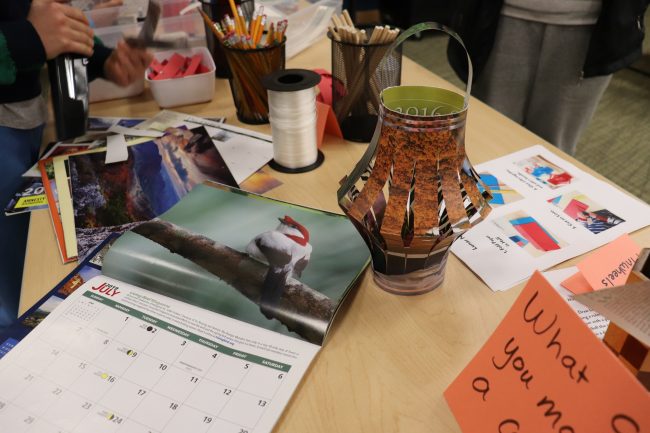
One of the most delightful surprises has been how this program has organically become a family art studio. Caregivers stay in the room, not because they have to, but because they genuinely want to join in. I’ve watched parents glue pom-poms with the same concentration their kids have. I’ve seen a grandfather quietly compete with a seven-year-old over who can build the taller pipe-cleaner tower. I’ve even seen toddlers firmly declare “No! Mine!” when an adult tries to borrow their glitter glue. The dynamic is playful, collaborative, and wonderfully intergenerational.
And here’s something I never expected to say as a youth services librarian, the behavior in this program is some of the easiest I’ve ever managed. Maybe it’s because the kids feel free to make what they want. Maybe it’s because the adults are happily crafting right alongside them. Or maybe everyone is simply too focused on deciding where the googly eyes should go to get into mischief. Whatever the reason, the room feels joyful, calm, and creatively buzzing every single time.
There’s something powerful that happens when we take away the pressure to make something “right.” Kids discover that the process itself matters. Experimentation becomes exciting instead of intimidating. Their ideas start to guide them rather than the other way around. I’ve seen children who rarely speak light up while explaining their creations. I’ve watched shy kids confidently offer design advice to grown-ups. Families linger long after cleanup time because they’re still adding “just one more detail.”
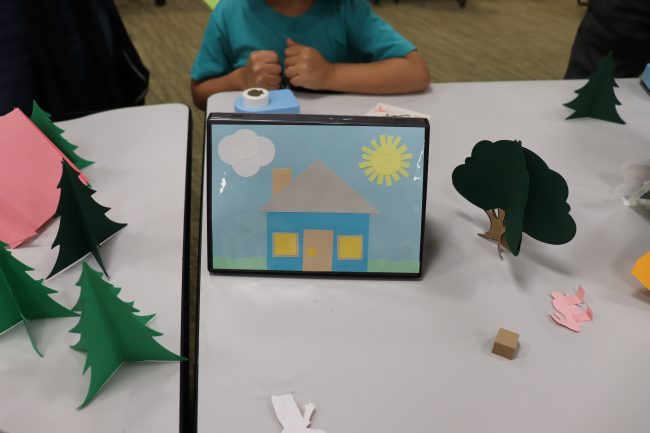
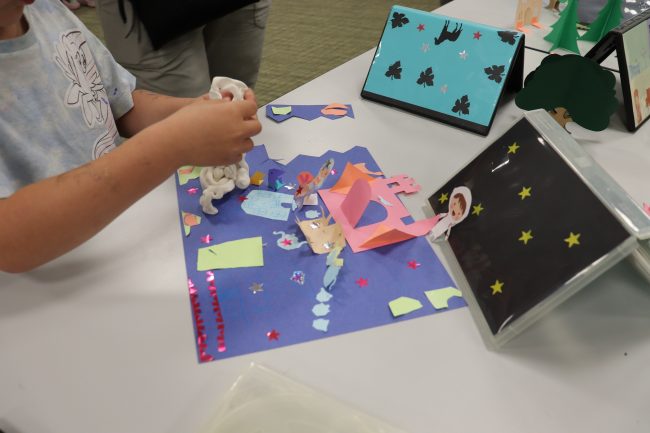
Let’s Create has taught me to embrace the beautiful chaos of open-ended programs and to trust children to lead their own creative process. It has reminded me that materials don’t need to dictate outcomes, and that sometimes the most meaningful thing I can do is step back and let relationships and imagination shape the experience.
Libraries are not just places to consume stories, they’re places to make them. And sometimes those stories are told entirely with glue sticks, cardboard scraps, and an impressive number of sequins.
If you’re looking for a program that invites families to slow down, make something together, and rediscover the joy of simple creativity, process art may be the perfect place to start. Just be prepared for the occasional rocket-octopus-robot. Those are part of the magic.
Want to Try a Let’s Create Program at Your Library?
Here’s how to get started, no rocket-octopus-robot required:
- Choose open-ended materials.
Think cardboard, paper tubes, fabric scraps, yarn, pom-poms, bottle caps, and plenty of tape and glue. The less “finished” the supplies look, the more imaginative the results. - Offer inspiration, not instructions.
Set out a few sample creations as conversation starters, not models to copy. A simple “I wonder what you could make with this?” goes a long way. - Invite caregivers to stay and create.
Let families know this is a shared experience. When adults make alongside kids, the room naturally becomes calmer, more collaborative, and more joyful. - Step back and observe.
Resist the urge to fix, redirect, or improve creations. This is about process, not product, and children will show you exactly where the magic is. - Plan for easy cleanup.
Table coverings, labeled bins, and a relaxed attitude help keep the focus on creativity instead of perfection.
Have you tried Process Art? How did it go? Let us know in the comments below!
(Photo credit for above photos: Renee Kitson)
Today’s guest contributor today is Renee Kitson. Renee is a Youth Services Librarian at the Mountain View Public Library. She loves designing programs that encourage children to explore, create, and follow their own ideas, even when those ideas involve seventeen googly eyes. She’s passionate about inclusive, process-based learning and believes libraries are at their best when they make room for joyful messes.
Please note that as a guest post, the views expressed here do not represent the official position of ALA or ALSC.
If you are interested in submitting a guest post, please read and fill out our Guest Blogging Interest Form. We would love to hear from you!