The grandeur of the architecture touches you as a visitor to Washington D.C. when strolling down Pennsylvania Avenue. Is it the gracefulness of the U.S. Capitol building dome designed and constructed during Abraham Lincoln’s presidency – or something more? Is it the inspiration of the White House, National Art Gallery East Building, and the National Archives – or something more?
A captivating blend of enterprise, excellence, and goodness fills the air drawing you to explore our national treasures. How can you be prepared to soak in this grandeur? Can this legacy and history of the United States be captured in a short list of suggested books? Can a few books capture the essence of the importance of Washington D.C. as the nation’s capital? Probably not, but we can prepare you to not miss out on the essence of D.C.
ALSC Local Arrangements – Eboni Njoki, committee chair, and members, Kristen Bodvin, Paula Langsam, Marge Loch-Wouters, Kathie Meizner, Diana Price, Dorothy Stoltz, and Jamie L. Watson – have been exploring D.C. to offer suggestions for not-to-be-missed tourist sites, restaurants, and getting around during the ALA Annual Conference. In addition – being librarians – we offer a short list of not-to-be-missed books to ponder on before, during, and after your trip to D.C. Join your colleagues and all the people who come from across the United States – and beyond – to explore D.C. and link to the history, culture, and creativity of the country.
America’s Greatest Library: An Illustrated History of the Library of Congress by John Y. Cole (GILES, 2018)
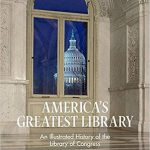 With a forward by Carla D. Hayden, Librarian of Congress, America’s Greatest Library highlights the best of America’s literary, cultural, and innovative works – “welcomed and forever preserved” at the Library of Congress (LOC). The collection holds over 168 million items from books and microfilm to audio and moving pictures. Cole takes the reader through the expansion of the LOC as a library for the U.S. Congress during1800 – 1897, to the nation’s library, 1898 – 1959, to a world renowned resource, 1960 – 2016. Learn about women’s contributions to children’s literature in the1800s and early 1900s. Rare Books and Special Children’s Collections by American Women at LOC Plan a visit to enjoy the special exhibition through July 29, 2019 on Baseball Americana at LOC
Awesome Adventures at the Smithsonian: The Official Kids Guide to the Smithsonian Institution by Emily B. Korrell (Smithsonian Books, 2013) Ages 8 – 12
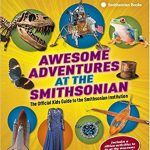 Korrell demonstrates why the Smithsonian with its 19 museums, zoo, and 137 million objects magnetically draws twenty-five million visitors each year. Focusing on three key museums – The National Air and Space Museum, The National Museum of Natural History, and The National Museum of American History – this interactive guide encourages readers to be explorers, scientists, and historians and features photos, information nuggets, questions, games, and more. Learn about a five-story dollhouse donated in 1951 to the Museum of American History by Faith Bradford (1880–1970), a Washington D.C. librarian, who as a young girl in Virginia began collecting all things miniature and spent the rest of her life accumulating and constructing over 1,300 miniatures that fill the dollhouse’s 23 intricately detailed rooms. Dolls’ House Exhibition National Museum of American History Discover the ingenuity behind the technology of the 1969 Apollo 11 moon landing at the National Air and Space Museum. Celebrate Apollo 50
A History Lover’s Guide to Washington, D.C.: Designed for Democracy by Alison Fortier (The History Press, 2014)
 This entertaining and engaging guide fosters understanding of well-known and not-so-well-known figures, places, and efforts that shaped Washington D.C. Learn about where Abraham Lincoln stood to watch the ongoing construction of the Capitol building’s dome during the Civil War to demonstrate the strength of the Union. Find out who Alexander Shepherd was and his role in the 1870s to beautify the city by burying sewer lines, paving streets, and planting thousands of trees. Discover why Frederick Douglass felt it was important to move to D.C. Visit DC History and Culture
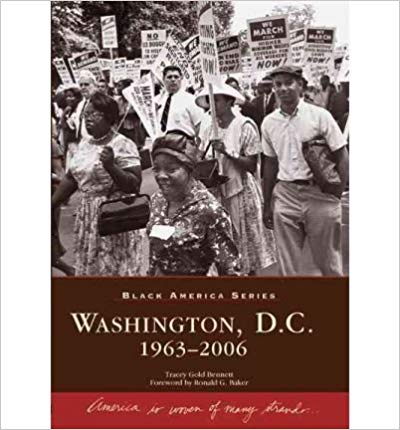
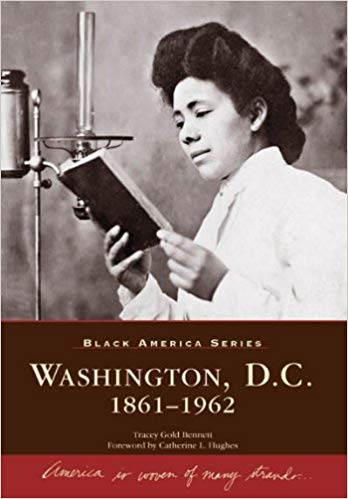
Washington, D.C.: 1861-1962 (Black America Series) by Tracey Gold Bennett (Arcadia Publishing, 2006) and Washington, D.C.: 1963-2006 (Black America Series) by Tracey Gold Bennett (Arcadia Publishing, 2007)
These illustrated and historical companion guides document the role of black Americans in the nation’s capital, 1861 – 2006. Photographs chronicle the journey of how African Americans helped to break down barriers of race and class – from the Civil War to the struggle of the civil rights era to triumphs of African Americans – in the most politically powerful city in the United States. Learn about Mary McLeod Bethune’s role as a national advisor to president Franklin Delano Roosevelt on the betterment of black Americans during the 1930s and 1940s. Mary McLeod Bethune Council House National Historic Site Stand on the step of the Lincoln Memorial overlooking 200,000 people converged on the mall in 1963 as Dr. Martin Luther King, Jr. delivers his call for the country to change its policy of institutional discrimination. Learn more at the National Museum of African American History and Culture
Count to Sleep Washington, DC written by Adam Gamble and Mark Jasper, illustrated by Joe Veno (Good Night Books, board book edition, 2014) Ages preschool and up
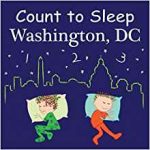 Using D.C.’s most famous sites, Count to Sleep Washington, DC helps young children learn about counting and the nation’s gems while easing them to sleep. Visit the National Mall
Dewey Decimated by Charles A. Goodrum (Crown Publishing, first edition 1977, second edition, 1988)
 Charles A. Goodrum (1923 – 2012), director of the Office of Planning and Development for the Library of Congress (LOC), and author of several non-fiction books about the LOC and its collections, created a fictional series of murder mysteries set in a world-renown rare book library, Werner-Bok Library, in D.C. With tongue-in-cheek references, this who-done-it style storytelling will delight book and library lovers. “Half her time was spent keeping the Library’s name out of the paper, and the other half was dedicated to getting it in.” Check out D.C. Public Library’s project, By the Book, which explores life in Washington D.C. and its character as a city, as brought to life by fiction. The site crowd-sources passages from the (largely undiscovered) body of literature set in DC and brightens its social and geographic history. D.C. Public Library’s By the Book Crowd Source Project
The Capitol Mysteries series written by Ron Roy with various illustrators; Capital Mysteries #5: Who Broke Lincoln’s Thumb? written by Ron Roy, illustrated by Timothy Bush (Random House Books for Young Readers 2005) Ages 6 – 9
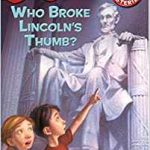 The Capitol Mysteries is an early chapter book series featuring famous sites from Washington, D.C. Book #5 Who Broke Lincoln’s Thumb follows KC and Marshall as they solve the mystery of the Abraham Lincoln statue’s missing thumb at the Lincoln Memorial. Students learn fun facts such as the name of the statue’s sculptor, Daniel Chester French, who was one of the most prolific and acclaimed American sculptors of the late nineteenth and early twentieth centuries. Lincoln Memorial National Park
House Mouse, Senate Mouse written by Peter W. Barnes, illustrated by Cheryl Shaw Barnes (VSP Books 1st edition 1996) Ages 6 and up
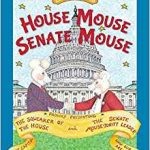 The Squeaker of the House and the Senate Mouse-jority leader are seeking action to pass a law designating a national cheese. Entertaining and educational, children can learn about the legislative process and be inspired to find balance to get things done. House Mouse, Senate Mouse Visit the U.S. Capitol is first in a series including Woodrow, The White House Mouse Visit the White House with 21 days advance request via your Congressional representative and Marshall, The Courthouse Mouse: A Tail of the U.S. Supreme Court. Visit the public portions and exhibitions of the Supreme Court building
District Comics: An Unconventional History of Washington edited by Matt Dembicki (Fulcrum Publishing 2012) Ages 12 and up
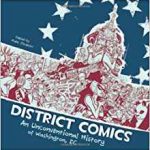 This anthology of lesser-known stories told through illustrations, cartoons, and comics spans the years 1794 to 2009. It features police officers, pandas, rock and roll punks, and a few politicians. You might enjoy this night bus tour of D.C. Monuments by Moonlight
A Literary Guide to Washington, DC: Walking in the Footsteps of American Writers from Francis Scott Key to Zora Neale Hurston by Kim Roberts (University of Virginia Press 2018)
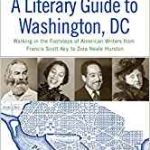 If you enjoy books, essays, and poetry, you’ll savor many of the stories in this literary guide of American writers who lived in D.C. between 1800 to 1930. Did you know that Mark Twain and Frederick Douglass lived for significant periods of time in D.C.? Roberts spotlights other well-known writers who called D.C. home including Walt Whitman, Langston Hughes, John Burroughs, Zora Neale Hurston, and Sinclair Lewis – who published Main Street, Arrowsmith, and Babbitt while living in D.C. Learn about many other lesser-known but influential writers, such as, Anne Lynch Botta, Solomon G. Brown, and Charlotte Forten Grimke. Although best known for her children’s books, The Secret Garden and Little Lord Fauntleroy, DuPont Circle resident, Francis Hodgson Burnett, was a prolific writer of fiction and plays for adults. A Literary Guide to Washington, DC is divided into four time periods and offers self-guided walking tours of each period.
Happy Reading!
This post was written by Dorothy Stoltz, Carroll County (MD) Public Library, on behalf of the ALSC Local Arrangement Committee for ALA Annual in Washington D.C.
This post addresses the following ALSC Core Competencies: Professionalism and Professional Development.