
Just about any librarian who works with children knows that kids have real concerns about the future – both for themselves and for the planet. We often hear even very young children express fears about climate change. A few ways we try to help our community deal with ecoanxiety are by offering hands-on programming, modeling and talking about conservation efforts, and providing information, reassurance, and hope through especially engaging books.
Programming
We try to teach kids that they’re not powerless, and that they can effect transformation. We’ve found that programs that provide opportunities for participants to engage in hands-on solutions (planting trees, creating pollinator gardens, caring for pets, respecting wildlife, repurposing found art materials) foster agency and stewardship. Positive feedback tells us it’s appreciated when we offer these activities throughout the year, and not just for Earth Day.
Modeling interventions
As far as modeling interventions, we do offer recycling and water bottle refill stations, but people also respond to our extended conservation efforts. We’ve tried moving away from plastic garbage bags and table protectors and going with biodegradable materials; digging out old chalkboards to cut down on paper waste, and acquiring decorations that can be reused (disco balls, cloth flags, electronic displays) instead of using balloons and one-use disposables. We always try to share the reasoning behind these conscious decisions through signage and everyday conversations. Kids need to see that adults do care, and realize that everyone can pitch in, even with small gestures that add up and make big differences.
Resources to share
There are lots of resources, both fiction and nonfiction, that address ecoanxiety. We’ve found it easy to locate reassuring titles and routinely integrate them into story times, book talks, and reading lists. We also use passive programming (eco-centers, book displays) to offer ever-changing series of thoughtful, encouraging, and funny stories that can offset persuasive and upsetting climate angst.
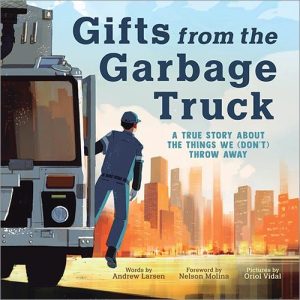
A few recent noteworthy titles for the picture book crowd include Alberto Salas Plays Paka Paka con la Papa: Join the Quest with Peru’s Famed Scientist and Potato Expert by Sara Andrea Fajardo (2025, Roaring Brook), Gifts from the Garbage Truck by Andrew Larsen (2024, Sourcebooks/eXplore), and especially How to Explain Climate Science to a Grown-Up by Ruth Spiro (2025, Charlesbridge). For middle grade and independent readers consider Kate Messner’s History Smasher offering, Earth Day and the Environment (2025, Random), the wonderfully inventive Future Vision: Stories of Our Brilliant Tomorrow by Cathy Rogers (2025, Button), and Wild at Heart: The Story of Olaus and Mardy Murie, Defenders of Nature by Evan Griffith (2024, Sleeping Bear).

And then for middle school and up, there’s Climate Is Just the Start by Mikaela Loach (2025, Random/Bright Matter), Take a Hike! And Other Ways to De-Stress and Relax in Nature by Kate Chynoweth (2025, Magination), and The Twenty-One: The True Story of the Youth Who Sued the U.S. Government over Climate Change by Elizabeth Rusch (2023, Greenwillow). We’ve also put out titles for parents. Parenting in a Climate Crisis: A Handbook for Turning Fear into Action by Bridget Shirvell (2025, Workman) seemed especially helpful.
Ecoanxiety is a real issue for our kids. We need to be proactive and help them cope through action-oriented solutions. We need to offer facts and reassurance. Mostly we need to let children know we do care, and that we’re willing to work with them to make a better future.
Kathleen McBroom is the School Library Media Practicum Coordinator with the School of Information Sciences at Wayne State University in Detroit. She has worked in both public and school libraries.
This post addresses the following ALSC Core Competencies: I. Commitment to Client Group, III. Programming, and IV. Collection Knowledge and Management.