In an effort to help ALSC members make an informed decision before they vote, the blog posts yesterday and today consist of interviews with the candidates for 2016-17 ALSC Vice President/President-Elect, Ernie Cox and Nina Lindsay. Each candidate was given ten questions and submitted written answers.
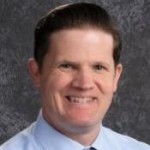
Today’s interview is with Ernie Cox:
1. What do you consider the most important role of the ALSC President?
The President needs to work with the Board of Directors, Division Leadership, and
Committees to produce results that help members achieve our core purpose of “Creating a better future for children through libraries.”
2. What skills & strengths would you bring to the office?
My time on the ALSC Board of Directors taught me that enduring changes come by:
- building broad support and consensus around our strategic goals;
- adjusting our organizational structure and processes to produce positive actions; and
- making knowledge-based decisions.
I have experience through ALSC and my work as a Teacher-Librarian in these areas.
3. What area of library service to children is your favorite?
The awe-inspiring variability of children.
4. Why should someone choose to join ALSC? What services do you feel ALSC provides that are valuable to new members? To long-term members?
Someone should join ALSC if they are serious about being part of a profession dedicated to serving children. The work of children’s librarianship is not a nice little add-on to a public library or an afterthought to the mission of a school. School libraries and children’s departments are fundamental to serving a large number of community members – kids and their families! ALSC members are committed to making childhood a positive experience. They are advocates for the rights and interests of kids. How can you get involved? Check out the MANY ways right here: http://www.ala.org/alsc/getinvolved.
5. What are your ideas for reaching and involving members? What are your ideas to recruit new members?
While serving on the ALSC Board of Directors we worked to transform the annual membership meeting into a participatory event. We also held online community forums on topics of importance to members. When we fill a room (virtual or face-to-face) with ALSC members we have harnessed extraordinary energy and drive. I’d work to make ALSC even more participatory. This might involve finding new or emerging digital platforms as well as rethinking how we organize our time at conferences. I’m interested in reaching out to people who are not currently part of ALSC. Grassroots groups such as the Storytime Underground show me there is more to learn about what is happening in our field. I want to focus on expanding conversations. People will come to ALSC if it responds to their needs and interests.
If current members are interested in expanding outreach they should consider applying for the ALSC Roadshow.
6. How has ALSC membership impacted your life? How has your membership in ALSC impacted library service to children?
I’m honored to stand for election because I consider the members of ALSC to be invaluable colleagues and friends. My life and career have been enriched enormously by membership in ALSC because it offers a national network of expertise. This network informs the work I do at my school and in my community. A recent example – our school was given the opportunity to purchase a 3D printer. This is not something I learned about in library school! I knew my friend and colleague Kevin Delecki at the Greene County Public Library in Dayton, Ohio had ventured into this realm and I reached out to him. A few emails later I had a printer ordered and knew my next steps. The inspiration, training, and resources that ALSC and its members provide has pushed me to do better work in my own library and school district.
7. Advances in technology are dramatically impacting libraries. What are your thoughts on how ALSC can best continue to be a positive force for librarians, for libraries, and for children?
The Media Mentorship in Libraries Serving Youth white paper highlights this reality and establishes what we as children’s librarians can do to serve our communities. Here are two of the positions adopted by the ALSC board and how to move forward:
“Media mentors support children and families in their media use and decisions.”
Children’s librarians need to know how to identify quality media. ALSC has begun this work with the Great Websites for Kids. We can expand our evaluative function by reenvisioning current notable lists and awards to include apps and other new media. This work is in progress and I would support it moving forward.
“Professional development for current librarians and youth services practitioners include formal training and informal support for serving as media mentors.”
ALSC needs to continue to offer programs at conferences, virtual learning opportunities, and toolkits to support localized professional development needs. This won’t be effective in isolation. I would work to ensure we are collaborating across ALA and with outside organizations that have common concerns such as The Fred Rogers Center, The Joan Ganz Cooney Center and The Erikson Institute.
8. ALSC has a commitment to conversations on diversity and inclusion and the essential roles that children’s librarians have in ensuring rich and diverse collections and programming. How will you work to enhance this commitment?
First, thank you for this question. I hope ALSC members can keep this question central to our work. This growing conversation is an important way to provide people with the opportunity to do some self-reflection and learning about their own histories within a racially stratified society. Several years ago I had the opportunity to hear Dr. Cornel West speak as part of the White Privilege conference in Mt. Vernon, Iowa. It was a crystallizing moment – I realized that to truly advance social justice (and offering collections and events for all children can be social justice work) I needed to understand how being white has shaped my lens on the world. I was reminded of this recently when some teaching colleagues and I approached an African American education professor here in Iowa. We wanted her help in better understanding the growing population of African American and bi-racial boys in our school. Her response was “You need to know yourselves better first”. She was generous enough to help us set off on a project to study ourselves as white teachers with diverse classrooms. To go deeper in these conversations about diversity and inclusivity in collections and programs will mean going deeper into our own histories. There are productive, safe, and honest ways to facilitate these types of conversations.
For me another key lesson came from Walter Dean Myers’ Arbuthnot Lecture and the introductory remarks by Marion Wright Edelman. They both highlighted the uniquely American phenomenon of the cradle to prison pipeline. This pipeline is constructed by many institutions (unfortunately this often includes schools too). What institution has the potential to disrupt this pipeline? Libraries! We as children’s librarians do have an essential role in providing all children with the opportunity for a bright future – if we choose to make it so. This will require us to reassess programming and collections. It will involve looking around our communities and seeing where kids are having difficulty. Where are they beginning to encounter the pipeline? Then asking what implications this has for programming and services. It will call on us to collaborate with other institutions and organizations that may need reforms of their own.
What I’m seeing in this moment is the growing awareness by many white people that we must be more involved in the work of creating a society where equality is a real thing for every person – particularly children. Part of that involvement is providing a way for voices that are historically muted to be heard loud and clear. These conversations can happen through deliberately creating the context – the recent diversity forum is a great example of this. ALSC can also ensure that making efforts to collaborate more deeply with associations such as CSK and REFORMA enhances our professional discourse. ALSC needs representatives of these associations on more of our committees. Many of their members have been having these types of conversations for years. To truly attain inclusivity will require examining the current structures of power and influence in the field of children’s librarianship. For some ALSC members this level of professional discourse could be new and challenging (and maybe threatening). ALSC can facilitate opportunities to grow and learn from one another.
9. If elected, what topic would you like to highlight for either a preconference or the Charlemae Rollins President’s Program?
Having the ability to read, to be literate, is part of the foundation to participating and thriving in our society. Childhood poverty is damaging this opportunity for far too many children. I believe libraries can ensure a better future for all children if kids have access to the resources, and services of libraries. What we know from research by Richard Allington and Anne McGill-Franzen is that kids who remain in the achievement gap do not have access to reading material in the summer. While their wealthier peers go to the public library, have home collections, and go to the bookstore, poor children have no access to reading materials or the library in the summer. My program of choice would help prepare public and school library collaboration to scale out national solutions to the summer reading slide. We’ve been working in my district to address this need and are beginning to see positive outcomes. It has required us to rethink what we believed about summer reading, summer learning, and how a school can engage children as readers year-round. The payoff is we are seeing kids closing the gap created by poverty.
10. What else would you like the voting ALSC membership to know about you before they vote?
The only professional sport I enjoy is baseball. I grew up on a dairy farm in Oklahoma. I met my wife in an independent bookstore (Maria’s books in Durango CO). I have two daughters ages 7 & 11. I don’t wear bow ties ironically. I actually enjoy living in Iowa. Librarianship is my second career; I worked in Human Resource Management and Development in the for profit sector. My felt board skills stink!
****************************************************************************
The ALA website states that the 2016 elections will open on March 15 and close on April 22; eligible members will be sent their voting credentials via email between March 15-18, 2016. To be eligible to vote, individuals must be members in good standing of ALA as well as applicable divisions and round tables as of January 31, 2016.
Pingback: Nina Lindsay: 2016-17 ALSC Vice President/President Elect Candidate - ALSC BlogALSC Blog