The science of reading is the focus of curricula throughout the nation. However, student engagement and habitual reading are still essential components that are not talked about enough. Just because our students learn/know how to read, it doesn’t mean that they will read.
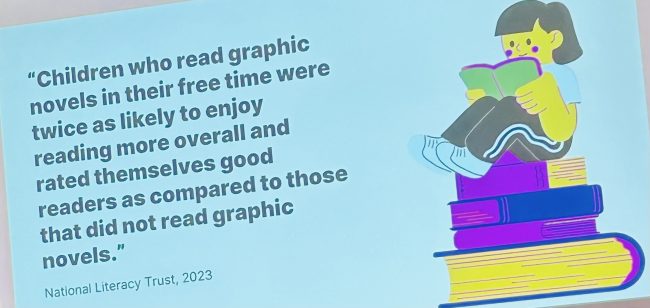
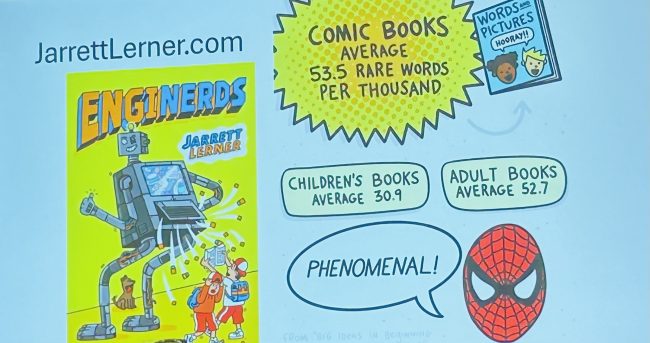
Panelists at the Graphic Novel and Comic Round Table Friday Forum discussed how graphic novels can motivate students to read and embrace their identity as a reader, which fosters lifelong habitual readers. Beyond motivating students to read, comics and graphic novels are beneficial for students in many ways, including vocabulary growth.
Additionally, comics and graphic novels can provide accessibility for students with dyslexia or aphantasia, a condition in which readers cannot visualize what they are reading. Recommended graphic novels, published in the past two years, include Mixed-Up by Kami Garcia, Very Bad at Math by Hope Lawson, and Silverwing by Kenneth Oppel.
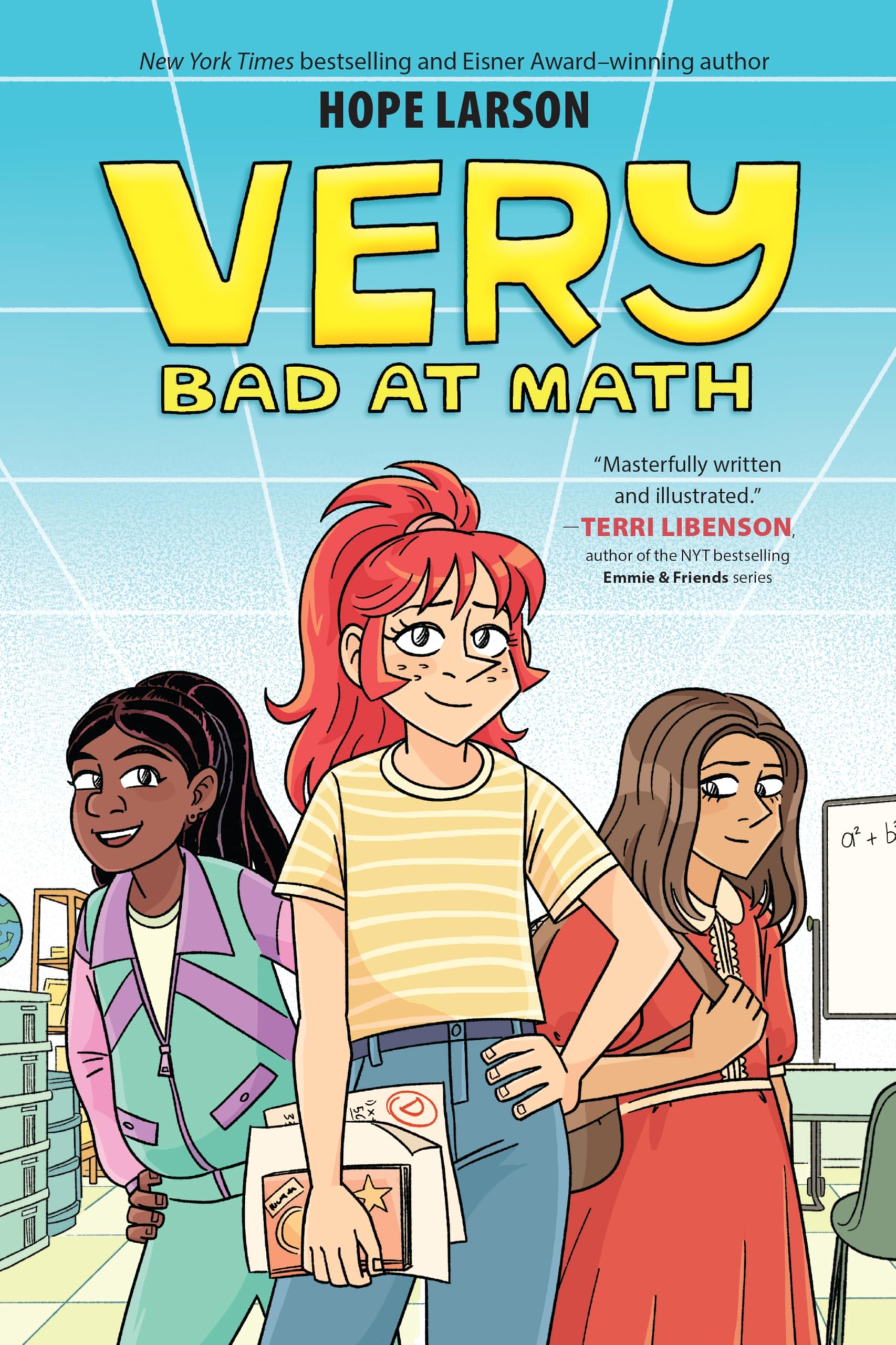

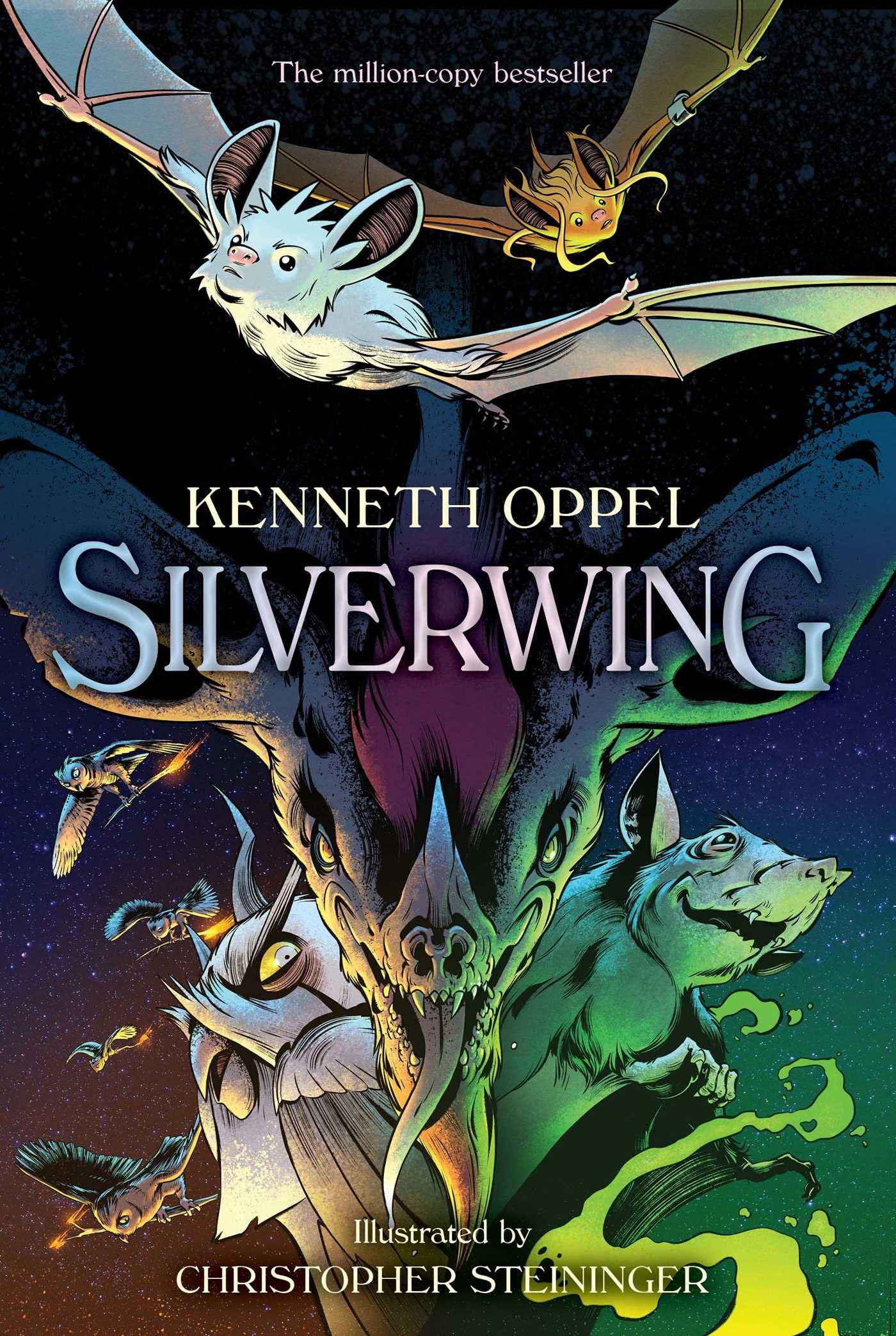
(All images taken by S. Sansbury at the Graphic Novel and Comic Round Table Friday Forum)
Sarah Sansbury (she/her/hers) is an elementary school teacher-librarian from Atlanta, Georgia. She recently finished her doctorate in school improvement with a focus on how school librarians contribute to student achievement. She is eager to learn how to better partner with local public librarians so that her students can benefit from all the community resources available to them. At the conference, one will most likely find her drinking coffee, no matter the time of day. You can follow her on BlueSky and Instagram: @supersansbury.
Please note that as a guest post, the views expressed here do not represent the official position of ALA or ALSC.
If you are interested in submitting a guest post, please read and fill out our Guest Blogging Interest Form. We would love to hear from you!