Tolerance: noun
- a fair, objective, and permissive attitude toward those whose opinions, practices, race, religion, nationality, etc., differ from one’s own.
- the act or capacity of enduring; endurance: My tolerance of noise is limited.
If tolerance were a product
It would be reviewed as out-of date. As public librarians, we put diversity in our shopping baskets. It was a new and improved version of tolerance, fortified with “foreign” languages and customs. It fit neatly on our shelves and we were happy. Of late, we realized that tolerance must instead be replaced with inclusion. Inclusion means a commitment to nurturing and maintaining an environment that represents, values and respects diversity and fairness. This cannot be purchased and requires action. If inclusion feels forced or not true to who you are, please read on – this is a blog post for you.
Speaking of you
Firstly you have to be happy. And, more than that, your happiness is dependent upon others being happy. If you conduct a story time, and you smile, others will (hopefully!) smile with you. In turn, this nourishes everyone in the room. The same is true of inclusion. Inclusion nurtures peace and happiness. If you can find it in yourself, you can transmit it. Easier said than done, I know. We are here on the doorstep of Thanksgiving. I ask you to embrace the spirit of this holiday: shift from a complaint-based life to life based on gratitude.
What will endure longer than any collection you ever build is your actions. The act of making your library a safe place for everyone in your community is the first step, and in reality increases your community’s freedoms. It takes action, though. So, how can we accomplish this?
It’s about Freedom
In the U.S., we treasure and revere our freedoms. As David Foster Wallace once said, though: “The really important kind of freedom involves attentions, and awareness, and discipline, and effort, and being able truly to care about other people and to sacrifice for them, over and over…every day”.
As librarians, we buy books and build collections. I hope you consider these role models and the beautiful works that highlight their lives. You cultivate your collections, and ensure the future of your profession and institutions. I hope you will see that only through cultivating compassion, and inclusion can we ever hope to remain relevant to our communities. Inclusion is the only sustainable paradigm.
Now…let’s get going!
- Book lists are nice, but first here is where you can find activities to go along with them! https://www.amnesty.org.uk/resources
- Virtually visit a whole museum dedicated to tolerance: Museum of Tolerance
Here’s that book list I promised
Role models for children to include in your programming:

Malala, a Brave Girl from Pakistan/Iqbal, a Brave Boy from Pakistan
Two Stories of Bravery

Martin’s Big Words: The Life of Dr. Martin Luther King Jr.

The Librarian of Basra: A True Story from Iraq

Nasreen’s Secret School
A True Story from Afghanistan

Grandfather Gandhi
By: Arun Gandhi

Separate Is Never Equal: Sylvia Mendez and Her Family’s Fight for Desegregation

A is for Activist

Counting on Community

Harvesting Hope: The Story of César Chávez

The Other Side

Let’s Talk About Race
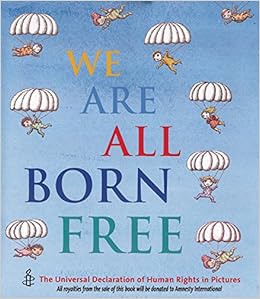
We Are All Born Free Mini Edition: The Universal Declaration of Human Rights in Pictures

My Name Is Bilal
by: Dr. Asma Mobin-Uddin
Epilogue
And if still you are not convinced, I invite you to compare notes with the United Nations on the topic of human rights:
Kara D
Thank you for this. It was the perfect way to start work on the day after Thanksgiving.
Jonathan Dolce
You are most welcome and thank you for commenting. I hope the post inspires and empowers. If you are going to the ALSC conference in January (just before the Midwinter Meeting), feel free to drop by my session!