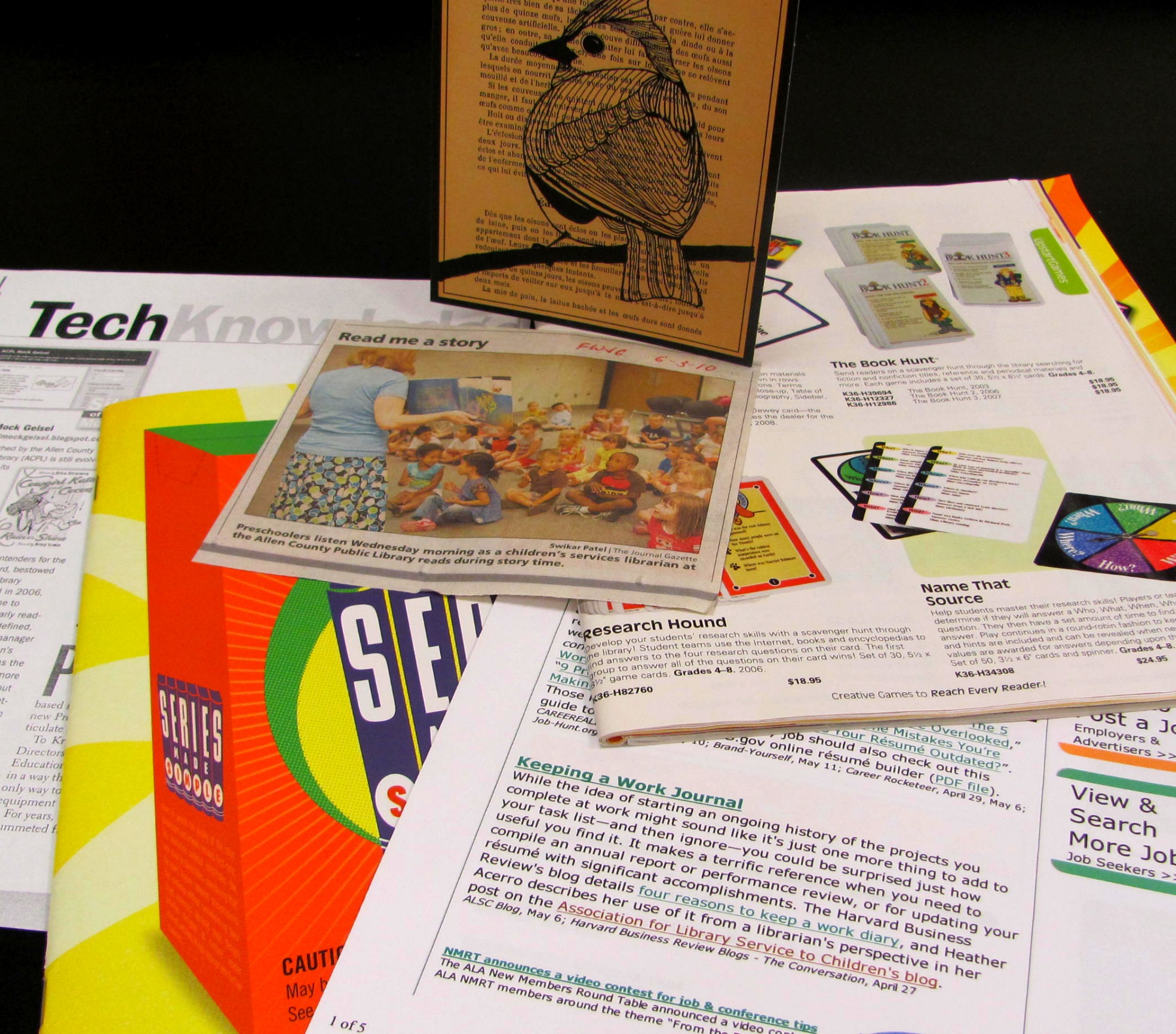
 Now that you’ve started your work journal, it is time to create your portfolio. The portfolio has all of the benefits of the work journal — use it for performance reviews, job applications, interviews and just to remind yourself of all of the good work that you have done. When you have a job interview to prepare for you’ll be pleased to have a well-organized plethora of work samples to choose from.
You can keep your portfolio in a file cabinet, but I prefer the portability of a three ring binder. For around $20 you can buy a nice sized binder, divider tabs and clear sheet protectors (make sure to get the medium to heavy weight ones).
A digital portfolio is a perfectly acceptable way to go. You can scan everything and store it on your computer, jump drive or in cyberspace, but realize that you will have to occasionally upgrade or adapt your storage system. I just had to toss a pile of floppy disks which contained a ton of information from a previous job. Because of the rapid pace at which technology changes, I prefer to use a paper portfolio with a digital backup of some items.
Now here is the hard part: decide how you will categorize your work. Be as general or as detailed as you want, just be sure that your categories make sense to you. You need to be able to file and find items quickly and easily.
Here are some suggested categories:
- Awards
- Committee Work
- Goals
- Grants
- Partnerships
- Performance Reviews
- Presentations
- Press
- Professional Organizations
- Programs
- Projects
- Publications
- Reports
- Reviews
- Training
- Warm Fuzzies
- Web Design
- Work Journal
Your categories will depend on your work and your interests. Be sure to include fun stuff and failures. You can’t get every grant that you apply for, so include the ones you didn’t get. You don’t need to show these to potential employers, but you will have them to refer to and learn from.
Notes about a few of the categories:
Goals: Use this category to keep your work efforts focused. Every year at performance review time, sit down and write out a few goals. Not just for the upcoming year, but for five years down the road.
Press: Any time your name or photo appears anywhere (websites, newspapers, magazines, etc.), put a copy here.
Programs: If you present storytime every week, take time every few months to type up an outline of one of your programs. Create a nice template to use and you’ll save yourself time. Also be sure to include interesting statistical information — did after-school program attendance go up after you made that innovative change? Put the supporting documentation here.
Projects: This is the place for that HUGE collection development project you worked on or a copy of that booklist that you created for homeschoolers.
Reviews: Do you review for any journals, newspapers or websites? Put a copy of each review here.
Warm Fuzzies: Call this category whatever you want, but just be sure to include it. Fill this category with thank you notes, customer comment cards, print outs of email pats on the back and any other good thing that you can find. Review this category often, because it is there to make you feel good.
Work Journal: Print out your work journal every couple of months, you never know when a computer file might go bad.
You are going to hang onto this stuff for thirty years, so don’t use paperclips or staples — they could rust.
Put each item/report/presentation in one plastic sleeve. If you need to run a copy of a thirty page grant application, you just have to grab it out of that one sleeve, rather than thirty individual sleeves. This will also make it easier to find specific items.
So what should NOT be included? I don’t have an answer for you. There is a line, but you will need to discover where it is for you. You don’t want to include too much, that will be an overwhelming disaster. If you create fifty new programs every year, include an outline of the best of the best. Remember, you still have your work journal where you will record each individual program.
If you’ve been throwing all of this stuff in a file folder, do yourself a favor and get it organized today. You’ll thank yourself (and me — I’ll add it to my warm fuzzies) when you can put your finger on exactly the document you need when you need it.
With your work journal, portfolio, generic resume and work history spreadsheet you will be ready for whatever the future brings. Did I just say work history spreadsheet? Am I really adding to the list of things you need to do? Yes, I am. I promise you, once you have all of these documents started, they will pretty much take care of themselves. For now get your portfolio ready, we’ll talk about the work history spreadsheet later. I promise.