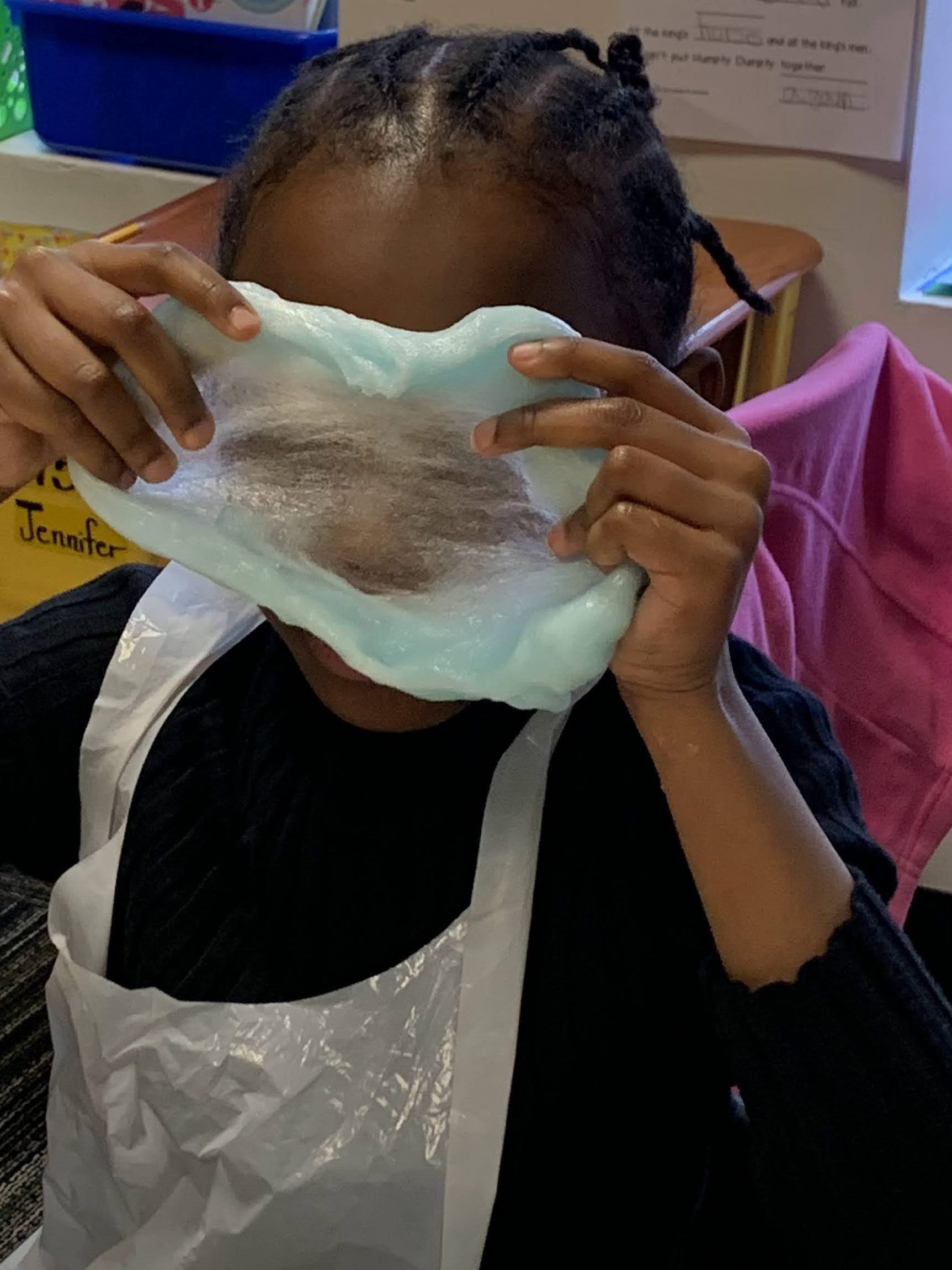
A favorite S.T.E.A.M.-making activity with school-age kids in my public library space is slime—it is sensory, it is fun, it is dynamic, it is real chemical science, and the kids love it. But each time I host a slime program, I have this little nagging feeling as I look around at all the glue that we’ve used as part of our recipe that will never-the-less be tossed in the waste after the programming hour or class visit is done. We do our best to recycle materials, reuse containers, and limit the amount of supplies used, but at the end of the day, when a ball of slime is thrown into the trash, I know it isn’t going to decompose nicely back into the ground. It may even go on to be harmful to animals and plant life – specifically sea life. (Here is a more eco-friendly alternative to your borax and white glue slime recipe, using chia or flax seed!)
I have been thinking a lot about waste these past few years. Sustainable programs and processes are huge considerations for large library systems. With close to 90 branches and over 10,000 children’s programs a year, mine is bound to consume and toss away lots of materials. The newest offender gaining traction is e-waste, electronic waste (basically anything with a plug or battery). According to the UN’s Global E-Waste Monitor Report, the annual generation of e-waste is rising by 2.6 million tonnes worldwide, on track to reach 82 million tonnes by 2030. The United States is the 2nd largest contributor to e-waste, and only 22.3% of that waste was properly recycled. And this accumulated waste will have harmful health effects on our health, especially our children.
All this seems overwhelming – and a global issue! – but what can you do in your public space today? As we wind down the year, and rethink our goals, here are some of my 2025 considerations:
- What types of materials do you purchase year after year? Set yearly targets for purchasing: less single-use plastics and more materials that are eco-friendly options in your S.T.E.A.M. programming should be the goal. Try a workplace audit to go plastic-free, like this one provided by The Plastic Free Foundation.
- How does your system dispose of e-waste? Contact your leadership to see what they are doing on a larger scale to dispose of old computers, laptops, or tech gadgets. Are there safe systems in place? Are the policies and protocols easily accessible and known to all staff?
- Are batteries powering your cool tech gadgets? Are rechargeable batteries an option? Create a safe-disposal plan at your library or even better within your library system! Brooklyn Public Library regularly hosts safe disposal fairs, coordinating with their municipal sanitation department.
- Right to Repair is something we can discuss with the kids, as a concept if not yet legislation. The first step to combat waste is learning to reuse or repair it yourself. Consider toy donations and make something with them: a display, prize giveaways, or make a swap or remix program out of it. In the past, one of my libraries hosted a toy remixing party, where we took old broken toys that were donated, and retrofitted parts together with hot glue to create entirely new, custom sculptures or action figures.
- Go digital when it makes sense. Promote some of the amazing digital art making websites and apps. Two free websites are: Scrap Coloring (coloring pages with different textile patterns and graphics), and Toy Theater (a variety of interactive art projects). If you must use paper, try making it!
Does your library already have e-waste or sustainability practices or programs in motion that we can all learn from this new year? Comment below to share!
So, here’s to 2025 and making waste resolutions! I know I will try harder to do the work to examine e-waste and recycling practices in my own library space, and my community systems as a whole.
(Photo provided by teacher Danielle Tahan of The Storefront Academy Harlem)
This post addresses ALSC Core Competencies 3.3, 3.4 and 3.6.
Andrea Grassi is a member of the ALSC Children and Technology Committee and is a Senior Children’s Librarian for The New York Public Library (NYPL). She focuses on community-fueled programming and partnerships, which include: early literacy instruction and specialization, creative writing and art for elementary and middle school students, and sensory learning for all ages. Away from the library, she enjoys baking and crafting of all sorts.
Honey
It sounds like you’re doing a wonderful job engaging kids in S.T.E.A.M. activities while being mindful of environmental impacts! Your concerns about the waste generated by traditional slime recipes are valid, and it’s fantastic that you’re considering alternatives. Using chia or flax seed as a base for slime is a brilliant idea—it’s biodegradable, safe for the environment, and still offers a sensory, fun, and educational experience for the kids.