Sometimes censorship arrives through an anonymous whisper instead of an angry outburst. Unlike soft or self-censorship, which usually refers to a librarian’s actions to remove, limit, or not purchase potentially controversial materials, this type of censorship is practiced predominantly by patrons. In these cases, individuals do not officially voice a complaint about a material or request its removal; instead, they hide or mis-shelve items they disagree with, rearrange displays, damage or destroy materials, or check items out so that certain titles cannot be used by others.
No perfect name exists for these practices, but examples abound, reminding us to stay aware, note patterns, and take action to protect access to materials for all.
Hidden Materials
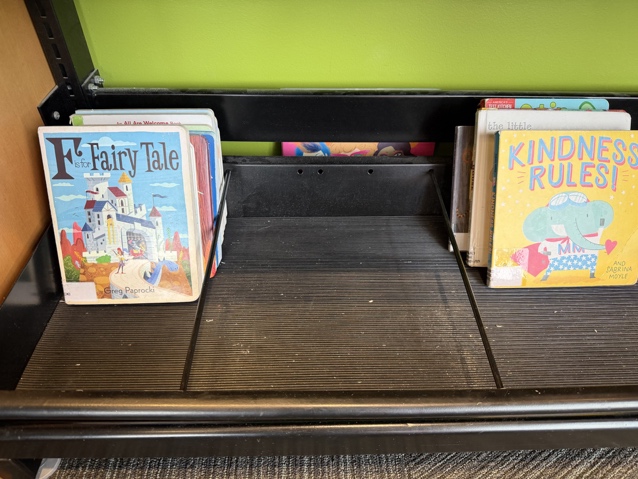
Items can be hidden in unusual spaces or inappropriate locations. We have found books about evolution underneath the video game shelves. New children’s titles on LGBTQ+ topics were once moved to the shelves in the used book sale area. A controversial teen book was found behind a bench cushion, and another was placed inside the covers of a thick beach read. The Trans Teen Survival Guide by Fox Fisher and Owl Fisher was shoved horizontally between shelves, so that it could not be seen, falling behind other titles. Similarly, The Hips on the Drag Queen Go Swish, Swish, Swish, a picture book by Lil Miss Hot Mess, was found against the wall, behind the board book shelves.
Rearranged Displays
Librarians create displays to feature or highlight items in the library’s collection, to celebrate a special day or season, or to make it easier for people to find materials on favorite topics. Sometimes, patrons do not want these materials to be found at all. Recently, we saw that someone had turned books on a display on antiracism and social justice upside-down and backwards, so that nobody could see the front covers. The same situation also happened to materials on a Pride display. Back when Blockbuster was in business, customers used this technique to discourage others from checking out certain movies.
Damaged or Destroyed
Disagreement about library materials can also lead to behavior problems. We once saw a teen kicking the book, This Book is Gay by June Dawsonacross the floor. Many years ago, we found My Little Pony books and videos in the toilet, repeatedly. One picture book was returned in the book drop with sections crossed out and rewritten, changing the character’s pronouns and gender identity. These examples are not only instances of vandalism but also a form of censorship.
All Checked Out
Individuals, often part of an organized group, sometimes check out large amounts of controversial materials to keep them away from the community. Librarians, however, may then look at statistics and conclude that these materials are very popular, leading to the purchase of additional similar items. In this instance, the censorship is temporary and may have the opposite outcome the censors had hoped for.
Gone Missing a.k.a. Theft
Every year or so, we check sections of the nonfiction collection that “go missing”: books about puberty, evolution and early humans, and, one year, abridged versions of Shakespeare plays. Whether individuals take these items for love or hate of the material, we’ll never know.
In many of these examples, the subtle (and sneaky) signs of censorship can seem random, bewildering, and even invisible, leading us to question whether censorship is happening at all. By observing collection spaces, taking note, and sharing unusual circumstances with others, we can discover trends in our communities and restore access by replacing missing or damaged items. It can be frustrating to have to replace items when the budget for materials is limited, but it is so important to do so. Don’t let the sneaky censors win!
Today’s blog post was written by Natalie Ziarnik, Deputy Director, Ela Area Public Library District, on behalf of the ALSC Intellectual Freedom Committee.
This post addresses the core competencies of IV: Knowledge, Curation, & Management of Materials.