I have been passionate about American Sign Language (ASL) since I was young and went to my local library to take out every book they had which could teach me the language. This motivated me to pursue my Bachelor’s in ASL Interpreting and work at a school for the Deaf, first as a classroom assistant, and then, after getting my MLIS, as the School Librarian. Even now, working as a Children’s Librarian at a public library, I continue to strive towards serving Deaf patrons the best I can.
Lately I’ve been wondering how we as Children’s Librarians, School Librarians, and more can best serve the Deaf kids that come through our doors. What are small steps we can take to show the Deaf community that they are welcome at the library? I’ve compiled some of the ways I’ve made the library a more accessible place, either during my time at the school or in my current position, as well as some ideas to implement in the future.
Representation in the Collection
As we all know, it is so important for our readers to see themselves represented in our collections. This is no different for Deaf kids. While working at the school for the Deaf, I tried to add as many books with Deaf representation into my collection as possible. From picture books about kids who sign, to biographies with characters using cochlear implants, I added as many as I could. I can’t count how many times a student of mine would ask if the character in a book was Deaf, and be delighted when the answer was yes.
As with any community and culture, it is important to add titles to our collections that show a diverse range of experiences in that culture. For example, with the Deaf community, we should have books in our collections that show Deaf children that use cochlear implants and speak a verbal language. We should also include stories about Deaf kids who don’t use any devices to help them hear and who only use a signed language to communicate. We should purchase titles about Deaf kids of color, Deaf kids with disabilities, Deaf kids doing everyday activities, and Deaf kids in extraordinary situations. Including a variety of stories and perspectives will allow patrons to see their own experiences represented, and understand the experiences of others as well.
If you are looking for some titles to add to your collection, here are some of my recommendations:
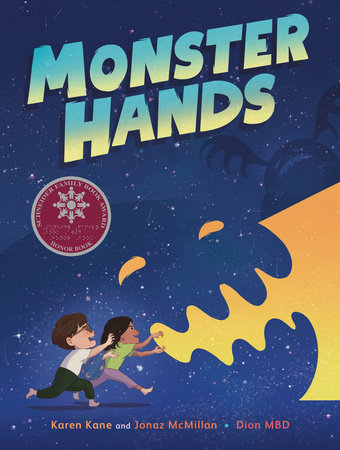
- Monster Hands by Karen Kane and Jonaz McMillan
- Emma Everyday by C.L. Reid
- El Deafo by Cece Bell
- Boy by Phil Cummings
- Listen by Shannon Stocker
- Dancing Hands by Joanna Que
- Moses Goes to School by Isaac Millman
- Show Me a Sign by Ann Clare LeZotte
- Bears Can’t Ski by Raymond Antrobus
- Deaf Child Crossing by Marlee Matlin
- Hello Universe by Erin Entrada Kelly
- True Biz by Sarah Novic
- Mooncakes by Suzanne Walker
- Give Me a Sign by Anna Sortino
Creating Accessible Displays
Another thing I tried to do while at the school for the Deaf was to create displays and a collection that were more accessible to the kids there that knew ASL but might not be fluent in English. One accessibility feature I installed was shelf markers in the picture book section that showed where each letter’s section started. Not only did I display the English letter, but I also included a picture of the letter in the ASL alphabet. This way, kids could more easily find the ‘W’ section when looking for Mo Willems books, for example, in both languages.

When creating displays and bulletin boards in the school library, I also included as much ASL as possible. I created a Black History bulletin board using pictures of ASL signs that described famous Black figures throughout history. I used ASL fingerspelling to spell out words on the flyers that explained what my displays were. I did anything to make my library more accessible for my patrons who used ASL as their first language.
I would encourage any librarian to include pictures of signs and fingerspelling in their displays and collection to create a more accessible library environment for all. I especially think you should include ASL when making Deaf History Month displays. Some helpful ASL sites are lifeprint.com and handspeak.com.
Programming Accommodations
While at the school, I conducted all of my storytimes in ASL. Now, at a public library and doing storytimes in spoken English, I have thought about how to make storytimes and programs more accessible to Deaf patrons.
Ideally, it would be amazing to have a storytime completely in ASL. However, it is the best practice to have a Deaf storyteller and native ASL user conduct a signed storytime. If you are interested in putting on an ASL storytime, one resource you could use is the National Association of the Deaf (NAD). They have a great list of each state’s agency for the Deaf and Hard of Hearing. Reaching out to your state’s agency would be a good first step in finding someone who could do an ASL storytime program at your library.
Another idea for storytimes and programs is to hire an interpreter, especially for large programs. This makes those programs more accessible and shows the Deaf community they are welcome and wanted at the library.
Since not all programs will be done in a signed language, it is important to provide accommodations for your patrons to make spoken programs more accessible. One simple accommodation is to use a microphone or headset amplification system to make yourself more easily heard to Hard of Hearing patrons.
Another thing that I have seen used in schools mostly, is an FM system. Many kids who have hearing aids and use a spoken language will have an FM system. This is kind of like a microphone that goes directly to the patron’s hearing aids. If a patron has an FM system and brings it to the library or school library, it is a very easy accommodation for the Librarian to wear the system around their neck so the patron can hear better.
The next easy accommodation is closed captions. Whenever showing a video at a library program, I believe closed captions should be used. This is extremely helpful, not only to Deaf patrons, but to older patrons, children, English language learners, and more. Another idea would be to print out the words to the songs and rhymes for your storytime, and have them available for patrons if they want to follow along. If someone is giving a speech or lesson at a program, have a print version available, too.
Celebrating a Community and Its Culture
Lastly, just as with any other community, it is important to celebrate Deaf culture with displays. September is Deaf Awareness Month and April is National Deaf History Month. I always try to make displays of books during these months that have Deaf characters, are about famous Deaf people in history, or even just teach kids ASL. Not only do my Deaf patrons appreciate these displays, but my hearing patrons get interested as well. I suggest you add Deaf Awareness Month and Deaf History Month to your list of displays to make throughout the year.
Whether you serve many Deaf patrons, or think that there are no Deaf people in your area, it is important to make the library as accessible as possible. So maybe you implement one of these strategies, or maybe you do them all! A little can go a long way to show that the library is, after all, for everyone.
I’d love to know how you serve your Deaf patrons in the comments below!
Emma Kell is a Children’s Librarian at the Public Library of Brookline in Brookline Village, MA. Previously, she was a School Librarian at the Learning Center for the Deaf in Framingham, MA. Through her work with the Deaf community, she became inspired to join the ALSC Equity, Diversity, and Inclusion committee, and try to make the library more accessible for all patrons. In her free time, she loves to craft, hike, and dance.